
Showing posts with label St. Louis Metro. Show all posts
Showing posts with label St. Louis Metro. Show all posts
Wednesday, October 1, 2008


Monday, September 15, 2008
Artificial limb maker adds Festus office to its offerings

Link to original article here.
Prosthetic & Orthotic Care Inc. is expanding its presence in the St. Louis region by opening a Festus office.
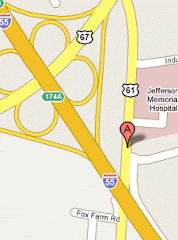
P&O Care currently operates offices in Des Peres and Fairview Heights, Ill. The Festus office, to be located across the street from Jefferson Memorial Hospital at 1479 Highway 61, is scheduled to open in early October.
Founded by Jim Weber and Jon Wilson in 2002, P&O Care designs, fabricates and fits artificial limbs and braces. Since its launch six years ago, the company has grown from Weber, Wilson and an office manager to 22 employees, including nine prosthetic and orthotic practitioners.
“We’ve been growing pretty aggressively,” said Weber, who is chief executive of the company. “The new location is 23 miles south of (Interstate) 270. We have a lot of patients in that area who come from all the way down to Farmington. With this being near a hospital and being right at (Interstate) 55 and (Highway) 61, it seemed like the right spot.”
P&O Care is investing about $50,000 in the new 1,800-square-foot Festus office, mainly to cover equipment and set up costs. Build-out of the space is being provided by the landlord, Tammy Fadler of Signature Properties in Festus, as part of the lease deal.
The new office, to be known as P&O’s Jefferson County Care Center, will include office space as well as a full-service fabrication laboratory for artificial limbs and braces.
“We do most of our fabrication at our Fairview Heights location, but we also have set up our other offices to have full fabrication capabilities,” said Weber, who declined to disclose the firm’s revenue. “I like to have full capability at the point of service.”
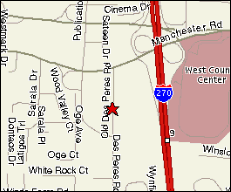
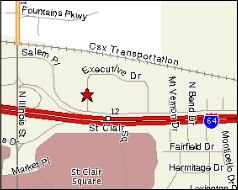
P&O’s Des Peres office, known as the St. Louis County Care Center, is located at 1074 Old Des Peres Road. The Fairview Heights St. Clair County Care Center is located at 13 Executive Drive, Suite 13.
In addition to the three office locations, P&O also operates seven mobile units, which prosthetists and orthotists use to drive to patients’ homes or nursing homes to provide care.
Demand for prosthetics and orthotics is on the rise nationwide. In 1990, more than 3.5 million Americans were using some kind of orthotic, up more than 100 percent since 1980, according to a Nielsen report. By 2020, the demand for services is anticipated to rise 25 percent for orthotic care and 47 percent for prosthetic care.
amueller@bizjournals.com
Wednesday, September 10, 2008
Tuesday, August 26, 2008
Doctors indicted for health care fraud, money laundering

James Harold Ellegood, 72, and his wife Wynsleen Ellegood, 47, operated Missouri Physician Home Services Inc. from their home, and Rajitha Goli, 48, of St. Louis, provided medical services to their patients.
Friday, August 22, 2008
Coming Soon: Jefferson Care Center @ 1479-D US Hwy 61, Festus, MO 63028

It looks now like we will have our accreditation and be fully operational in Festus by the end of September.
Thursday, August 7, 2008
Exotic animal facility to close after attack

Jacob Barr (left) rests Tuesday while his father keeps him company at Barnes-Jewish Hospital.
( Jordan Wilson/P-D)
ST. LOUIS POST-DISPATCH
Jacob Barr awakened slowly, opened his eyes, and pulled off the white sheet covering his legs. "As of Sunday morning, I had a leg," Barr said Tuesday, pointing to his right leg, amputated just below the knee. "Now, there's nothing there."
Barr, 26, of Warrenton, is recovering at Barnes-Jewish Hospital after he was attacked by a tiger Sunday at the Wesa-A-Geh-Ya exotic animal farm near Warrenton. He faces additional surgery today to remove more of the leg to just above the knee.
"I didn't even want to work there, I was just helping a buddy," Barr said.
Because of the mauling, Wesa's founders said Tuesday afternoon they would close their facility after more than 20 years of operation. The facility will give its animals away to three different sanctuaries within the next month.
"It's a number of things, but Jacob was the straw that broke the camel's back," said Ken Smith, 51, who started Wesa with his wife, Sandra, 58. "And I don't think I can fight the fight anymore. I think this has taken the life out of me."
Sandra Smith said the attack was the first time an animal mauled a volunteer. Wesa-A-Geh-Ya means "cat lady" in her native Cherokee language.
Wesa, which houses more than 50 lions and tigers along with other abandoned animals, has come under government scrutiny and criticism by animal rights groups in recent years. It was open to the public until the Smiths surrendered their exhibitors license to the USDA in late 2003 in the midst of a federal investigation. Both have been placed on probation for violations that included failing to keep cages properly locked and failing to register some animals.
The Smiths blame some neighbors and former volunteers for much of their trouble. Because of constant complaints and allegations of abuse, the Smiths say they were unable to add on to their animals' cages because the Warren County planning and zoning board denied their requests.
Sandra Smith said they wanted to add tops to their cages, which could have prevented the mauling, but were denied by planning and zoning.
Officials at the Warren County Commission could not be reached Tuesday but issued a statement saying that since 1995, the commission has "no record of any conditional use permit for cages or perimeter fence" from the Smiths.
Sandra Smith said as soon as Wesa finds its animals new homes, she and her husband will also leave town.
"Warrenton citizens won. We've thrown the towel in," she said. "I've got animals out there I love as much as some of my grandkids, probably."
Jim Barr said his son has that same love of animals. But for some reason, Barr said, animals never seemed to return the love to Jacob.
One time, Barr said Jacob's brothers were playing roughly with a golden retriever. Jacob was on the other side of the room, but the agitated dog bolted past his brothers and bit Jacob instead. He needed more than a dozen stitches.
Sunday was Jacob Barr's first trip to Wesa-A-Geh-Ya. He was helping a friend who was a volunteer, his father said. While Barr and another worker were cleaning a tiger's cage, the animal jumped a 12-foot fence and got hold of Barr. The 800-pound tiger "tossed Jacob around like a dish rag," his father said. The tiger was shot and killed to end the attack.
Initially, Wesa workers told authorities Barr was attacked by a pit bull. Warren County Sheriff Kevin Harrison said the story changed, though, when Barr's father told the department a tiger attacked his son, not a dog. Then, Wesa workers described the attack, Harrison said. Sandra Smith said the cover-up was done to keep her animals.
Jim Barr says his son never would have gone to Wesa if he would have known the conditions of the cages.
The Smiths remain horrified at the attack.
"I'd kill every animal out there if Jacob could have his legs back," Ken Smith said.
Tuesday, August 5, 2008
Man's leg amputated after tiger attack

St. Louis Post-Dispatch
WARREN COUNTY, MO. -- A volunteer at an exotic animal farm had his lower leg amputated Monday after a tiger attacked him Sunday on his first day of work.
Authorities said an 800-pound tiger attacked Jacob Barr, 26, of Warrenton, about 11 a.m. Sunday while he was helping clean cages at the Wesa-A-Geh-Ya facility near Warrenton.
Barr was listed in satisfactory condition at Barnes-Jewish Hospital in St. Louis after surgery to amputate his leg below the knee.
Barr's father's roommate and longtime friend, Chris Bryant, said Barr seemed to be in good spirits Monday afternoon after the surgery.
''When I talked to Jacob, he said he was so scared he thought he was going to die,'' Bryant said. ''He said, 'When the tiger started biting me, I kept punching it in the head.' ''
The tiger, named Tony, was shot by the owners during the attack.
Sandra Smith, 58, one of Wesa's owners, said Monday the attack was a ''freak accident.''
Smith said Barr was a first-time volunteer, and was being trained on how to care for the animals when the attack happened.
While Barr and another worker were cleaning the cage, Smith said the tiger jumped a 12-foot fence and got hold of him. The other volunteer screamed for help, she said, and Smith ran out with her gun and shot the tiger. Smith said her husband, Ken, 51, later shot and killed the tiger.
''When I shot that animal, my heart just died,'' Sandra Smith said outside her home, which is adjacent to Wesa. ''I knew it had to be done.''
In an interview Sunday with the Post-Dispatch, Smith said she would let authorities take and euthanize the roughly 60 animals at her facility.
But Monday, she said she wasn't sure if she was ready to give up. The Smiths have operated Wesa-A-Geh-Ya, which means ''cat lady'' in Sandra Smith's native Cherokee language, for more than 20 years, and she said this was the first time an animal mauled a volunteer.
Over the years, the facility has come under government scrutiny and criticism by animal rights groups.
Wesa was open to the public until the Smiths surrendered their exhibitors license to the USDA in late 2003 in the midst of a federal investigation. Allegations included not providing proper veterinary care and lacking adequately trained employees. Sandra Smith says they surrendered the license in order to keep the animals.
In 2003, she received probation for failing to keep cages properly locked. This past May, Ken Smith was placed on probation for failing to register some animals.
Sandra Smith says Wesa is the best chance the animals have at surviving since many of them have been abandoned. And as long as they are registered, it is legal to own exotic animals in Missouri.
Warren County Sheriff Kevin Harrison said his department will have to pay more attention to Wesa.
''The law may allow them to operate, but at some point we have to take initiative to regulate them beyond what the state of Missouri does,'' Harrison said.
''Now the thought has to be any time a cat wants to hop the fence and get to you, he can.''
Harrison said the facility has been mostly cooperative throughout the years, but workers tried to cover up the attack Sunday.
Initially, Wesa workers told authorities Barr was attacked by a pit bull. Harrison said the story changed, though, when Barr's father told the department a tiger attacked his son, not a dog.
Then, Wesa workers described the attack, Harrison said. The cover-up, which Smith says was done to keep her animals, is a major concern, Harrison said.
''If they're going to operate that kind of facility, they have a moral and ethical responsibility to the citizens to be honest,'' Harrison said. ''Especially when it could jeopardize other people's safety.''
Debbie Leahy, a director for the People for the Ethical Treatment of Animals, said she wasn't surprised to hear about the attack. She said she toured the facility about five years ago, and was shocked at the conditions of the cages. PETA sent a letter Monday urging federal wildlife authorities to investigate the attack.
''This was clearly an accident waiting to happen,'' Leahy said. ''We had received a number of complaints about this facility.''
Tiger attack near Branson
A worker at Predator World near Branson was critically injured in a tiger attack on Monday.
Stone County Sheriff Richard Hill said a 16-year-old worker entered a pen to take a photo for a customer and was attacked by three tigers. One of the animals knocked the teenager to the ground, while two others dragged the boy into a water pool.
Employees pulled the teen from the cage before emergency responders arrived. The teen was airlifted to a Springfield hospital and was in critical condition, with injuries including punctures to his neck. His name was not released.
The Associated Press provided information for this report.
Monday, July 28, 2008
Could Wash. U.'s Treatment for Obesity Lead to Fewer Amputations?


First U.S. incision-free procedure for obesity performed at Washington University
By Jim Dryden
July 24, 2008 -- Doctors at Washington University School of Medicine in St. Louis have performed the first non-surgical procedure in the United States that restricts the size of the stomach to treat obesity. The investigational procedure was performed under direct endoscopic visualization with specialized instruments passed into the stomach through the mouth. The first U.S. patient received the treatment on July 23 at Barnes-Jewish Hospital in St. Louis.
 |
| Photo by Tim Parker |
| Sreenivasa Jonnalagadda, M.D., and J. Christopher Eagon, M.D., performing the first TOGA procedure in the United States. |
| |
The procedure was performed as part of the TOGA Pivotal Trial, a multi-center study evaluating an incision-free procedure using the TOGA® System (transoral gastroplasty). Like surgery to treat obesity, the TOGA procedure is designed to alter a patient's anatomy to give a feeling of fullness after a small meal. The difference is that the investigational technique delivers the treatment through the mouth, without any incisions.
"This is a shift in the way we approach the surgical treatment of obesity," says Washington University bariatric surgeon J. Christopher Eagon, M.D., who is an assistant professor of surgery and local co-principal investigator for the study. "If this technique provides results close to those achieved with more traditional surgery, it may be an option for people who need to lose a great deal of weight but don't want to have surgery."
In the TOGA procedure, the physician introduces a set of flexible stapling devices through the mouth into the stomach, and then uses the staplers to create a restrictive pouch. The pouch catches food as it enters the stomach, giving patients the feeling of fullness after eating less. This study is evaluating the safety and effectiveness of the investigational procedure.
Between February 2006 and July 2007, 47 subjects had the TOGA procedure in a pilot study at medical centers in Mexico and Belgium. They weighed an average of almost 120 pounds over their ideal body weight. Six months after the procedure, subjects had lost more than a third of their excess body weight. By 12 months, their excess weight loss averaged almost 40 percent.
"That's not as great a loss as we see with gastric bypass surgery, which is still the 'gold standard' for weight-loss procedures," says Washington University gastroenterologist Sreenivasa Jonnalagadda, M.D., who is an associate professor of medicine and co-principal investigator at the St. Louis study site. "The key benefits from an endoscopic procedure as compared to laparoscopic or open surgery are quicker recovery period, shortened hospital stay, decreased risk of complications and an incision-free procedure. And if the restrictive pouch becomes bigger over time, as has been the experience with some obesity surgery patients, it may be possible in the future to further decrease the size of the pouch with this new generation of devices."
Carrie Williamson of Granite City, Ill., was the first U.S. patient. She was given general anesthesia when receiving the TOGA procedure and stayed overnight at Barnes-Jewish Hospital for observation.
Both Eagon and Jonnalagadda expect the TOGA procedure eventually could be performed on an outpatient basis with sedation rather than general anesthesia, depending on the study's results.
Subjects will be evaluated regularly for at least one year. All study-related medical care is provided at no charge, and patients receive medically supervised nutrition counseling. Because she was the first, Williamson knew she was getting the actual treatment, but during this study, one of every three volunteers will be a control patient, receiving anesthesia and an endoscopic evaluation of the stomach, without the TOGA procedure, for comparison purposes.
These control patients will be offered the TOGA procedure after 12 months if the procedure proves to be effective. Investigators will evaluate weight loss and monitor obesity-related health problems such as type 2 diabetes, cholesterol levels and hypertension.
"In patients undergoing gastric bypass surgery, it's common to see blood lipids and blood glucose levels normalize in the days after surgery, even before they lose any weight," Eagon says. "We may see similar benefits from this procedure, but we need to test that hypothesis."
The TOGA study will investigate the technique in at least 275 patients at centers across the United States. Investigators at the Washington University Medical Center site are planning to enroll at least 27 volunteers into the trial. Volunteers must be 18 to 60 years old and 100 pounds or more overweight. Some lighter patients may be considered if they have type 2 diabetes or high blood pressure. Patients with a recent heart attack, stroke, chest pain or severe reflux disease are not eligible.
Obesity affects more than 300 million people worldwide according to the World Health Organization. In the United States, the American Society for Metabolic and Bariatric Surgery estimates 205,000 patients had weight-loss surgery in 2007, but that number is estimated to be less than 2 percent of the eligible patient population.
"The TOGA procedure could provide another option for treating obesity," says Jonnalagadda. "Most of the common treatments — such as diet, exercise and drug therapy — have limited success in this population, and not everyone wants to have surgery, so this may help some patients who haven't had success with those more traditional treatments."
For more information about the TOGA study, patients or their families may call Volunteer for Health at 1-866-362-5656 or visit https://vfh.wustl.edu.
Manufactured by Satiety, Inc., the TOGA System is not currently approved by the U.S. Food and Drug Administration.
The TOGA Pivotal Trial is funded by Satiety, Inc.
Washington University School of Medicine's 2,100 employed and volunteer faculty physicians also are the medical staff of Barnes-Jewish and St. Louis Children's Hospitals. The School of Medicine is one of the leading medical research, teaching, and patient care institutions in the nation, currently ranked third in the nation by U.S. News & World Report. Through its affiliations with Barnes-Jewish and St. Louis Children's Hospitals, the School of Medicine is linked to BJC HealthCare.
Friday, July 11, 2008
P & O Care Expands South
 Prosthetic and Orthotic Care is growing, and many of its new patients have been coming from areas south of St. Louis, like Washington, Jefferson, St. Genevieve, and Perry Counties. So, this provider of artificial limbs and braces has decided to open a new office across from Jefferson Memorial Hospital at 1479-D US Hwy 61, Festus, MO 63028. The new location will enable P&O Care to better serve its current patients and provide more localized service for rural Missourians who otherwise would have to travel to St. Louis. More accessible care means that patients will take a more proactive role in making sure that their devices fit safely and comfortably, and it increases the likelihood that a patient will actually wear their arm, leg, or brace—or actually fill that doctor’s order for diabetic shoes!
Fully staffed during the work week with certified prosthetists and orthotists, and equipped with a full-service fabrication laboratory, the new facility will be known as P&O’s Jefferson County Care Center. The company will also begin referring to their Missouri and Illinois locations as the St. Louis County Care Center and the St. Clair County Care Center. They will continue to operate their outfitted minivans, known as Mobile Care Units, which prosthetists and orthotists can drive to patient’s homes or nursing homes. From Festus, P&O Care will have better access to outlying towns like Potosi, De Soto, Farmington, St. Genevieve, Chester (IL), and Perryville. They will even go to Cape Girardeau.
Jim Weber, President of P&O Care, says he hopes to have the new facility operational by late July or early August. Until then, his company is willing to go the extra mile, even with gas prices as high as they are, to service the entire region south of St. Louis from their St. Louis County Care Center in Des Peres.
View Larger Map
Thursday, July 10, 2008
Wednesday, July 9, 2008
STLtoday article: Choosing a hospital: A refresher course from bmclellan@pandocare.com
This STLtoday.com article -- "Choosing a hospital: A refresher course"--
has been sent to you by: "bmclellan@pandocare.com"
Choosing a hospital: A refresher course
By <A HREF="mailto:mjfeldstein@post-dispatch.com" CLASS="storyByline">Mary
Jo Feldstein</A>
ST. LOUIS POST-DISPATCH
Below is the link to the story.
http://www.stltoday.com/stltoday/business/columnists.nsf/maryjofeldstein/story/0919AF333159E14286257481000D7C69?OpenDocument
_____________________________________________________________________
If you enjoy reading about interesting news, you might like the 3 O'Clock
Stir from STLtoday.com. Sign up and you'll receive an email with unique
stories
of the day, every Monday-Friday, at no charge.
Sign up at http://newsletters.stltoday.com
_____________________________________________________________________
_____________________________________________________________________
All content copyright (c) 2007, St. Louis Post-Dispatch, L.L.C. All rights
reserved.
900 N. Tucker Blvd, St. Louis MO 63101
You received this email via STLtoday.com's Email a Friend feature. If you
want to block any future stories from being sent to you via STLtoday.com's
Email a Friend feature, please send an email to:
EMAF_Blocklist@stltoday.com
STLtoday article: How we pay doctors is key to prognosis for prevention from bmclellan@pandocare.com
This STLtoday.com article -- "How we pay doctors is key to prognosis for
prevention"-- has been sent to you by: "bmclellan@pandocare.com"
How we pay doctors is key to prognosis for prevention
By <A HREF="mailto:mjfeldstein@post-dispatch.com" CLASS="storyByline">Mary
Jo Feldstein</A>
ST. LOUIS POST-DISPATCH
Below is the link to the story.
http://www.stltoday.com/stltoday/business/columnists.nsf/maryjofeldstein/story/B2F8CE09326EF2B48625747A00077D2E?OpenDocument
_____________________________________________________________________
If you enjoy reading about interesting news, you might like the 3 O'Clock
Stir from STLtoday.com. Sign up and you'll receive an email with unique
stories
of the day, every Monday-Friday, at no charge.
Sign up at http://newsletters.stltoday.com
_____________________________________________________________________
_____________________________________________________________________
All content copyright (c) 2007, St. Louis Post-Dispatch, L.L.C. All rights
reserved.
900 N. Tucker Blvd, St. Louis MO 63101
You received this email via STLtoday.com's Email a Friend feature. If you
want to block any future stories from being sent to you via STLtoday.com's
Email a Friend feature, please send an email to:
EMAF_Blocklist@stltoday.com
Wednesday, July 2, 2008
Wednesday, June 25, 2008
Economic downturn affects local hospitals, too
Here's a fantastic story about economic changes we as a company have certainly noticed at some of the St. Louis region's biggest hospitals, including Barnes-Jewish Hospital, MO Baptist Hospital, St. Mary's Hospital, and the entire SSM and BJC systems. It remains unclear whether the economic downturn is also affecting outpatient heathcare services such as the prosthetics and orthotics profession.
Economic downturn affects local hospitals, tooST. LOUIS POST-DISPATCH06/25/2008
 Mary Jo Feldstein [More columns] [Mary Jo Feldstein's biography] (P-D) |
SSM Healthcare-St. Louis announced another round of departures last week. This time, it was mostly top hospital managers. Since the system's new chief executive, Jim Sanger, came on board late last year, nearly 200 local SSM employees have lost their jobs.
Most losses have been part of a larger shift to make the SSM system more cohesive. Most decisions on human resources, finance and technology will be made at two regional offices or at corporate. Eventually, nursing protocols will be formed by a centralized committee.
For years, managers at hospitals within SSM and BJC HealthCare — the St. Louis area's largest health systems — have controlled most decision-making within their facilities. Goals and benchmarks were set at the corporate level. Achieving them was left to the hospitals.
In many ways, experts say, the changes at SSM make sense. A more efficient system that's better equipped to determine best practices and implement them should result.
When a hospital system has several similarly sized facilities near each other, there's little reason to duplicate back-office functions, health care consultants said. And, as insurers and the government promote standardization to achieve better quality care, centralization could funnel directives more quickly through the system.
"Business in general is constantly pushing to say, 'How do we get the most value?'" said Susanna Krentz, a senior principal at the nonprofit Nobilis Center for Health Innovation near Chicago. "Health care systems are doing the same thing."
Change never occurs without discomfort.
"Whatever strategy the corporation adopts, it has to be consistent with the corporate culture," said Donald Davis, a managing director at TriBrook Group Ltd., a health care consulting firm in suburban Chicago. "Culture eats strategy for lunch."
Krentz and Davis said hospital systems around the country are trying to figure out the right balance of centralization and independence.
"There's no one right answer," Krentz said.
She points out the calculation might be quite different for BJC. It has hospitals ranging from a large academic medical center, Barnes-Jewish Hospital in the Central West End, to the 22-bed Clay County Community Hospital in Flora, Ill.
BJC's chief executive, Steve Lipstein, agrees. BJC corporate sets priorities and determines how progress will be measured. All of the hospitals use the same clinical-performance and patient-satisfaction scorecards, for example. But Lipstein said BJC's hospitals have considerable autonomy in implementing the objectives.
And, while Lipstein said it's important to manage costs and prevent duplication, he thinks physicians should be given the tools and equipment they feel is necessary to do their best.
On a side note, not all of this year's hospital layoffs have been the result of strategic change.
Some — including about 45 positions at SSM's St. Mary's Health Center in Richmond Heights and 25 at its DePaul Health Center in Bridgeton — stem from the hospitals seeing fewer patients than they expected.
Citing similar declines in patient volumes, Missouri Baptist Medical Center, BJC's outpost in Town and Country, said last week that it was laying off about 40 people, mostly administrative staff and managers.
Hospitals are facing increasing pressure to improve care while cutting costs. Quality directives from managed-care companies and the government are coming with slight, if any, increases in payment. And lately, some hospitals are seeing fewer patients.
It's not clear exactly what's driving the trend, but here's a possibility: As health plans raise the patients' portion of their medical bills and more families have fewer dollars to spend, some might be holding off on care. Meanwhile, outpatient and testing services continue to grow, sending more patients out of the hospital for care.
Though hospital finances might see leaner years ahead, hold off on the bake sales. Most of our area hospitals have built up healthy reserves in recent years. Indeed, difficult conditions might force them to ready themselves for the next generation of health care.
Tuesday, June 24, 2008
Congratulations Shawn!


While most states require professional certification and licensure for doctors, therapists, nurses, and hairdressers, currently only eleven require that prosthetists and orthotists get certified and licensed. Illinois does, but Missouri doesn't. Still, all of P & O Care's practitioners on both sides of the river have graduated from Northwestern University, and our residents work under proper supervision until they pass their boards.
Tuesday, May 13, 2008
St. Louis Prosthetists Get Accredited in iHand and Proprio Foot
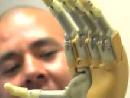
All of P & O Care's five prosthetists, including Jon Wilson, Greg Doerr, and Maggie Ware-Smith, have become accredited in the new Proprio Foot by the manufacturer Ossur. The Proprio offers is the first "bionic" ancle, with computerized sensors and a tiny motor that adjusts the angle of the foot to the angle of the incline on which a person is walking. Clinical Director Jon Wilson jokes, "Now, I can give you a foot that you can get up with in the middle of the night, and if you stub your toe, you can say, 'Ouch!'"

That's going a little too far, but the Proprio enables below-knee amputees to walk much more naturally up and down ramps and hills or over uneven terrain than they could with even the best traditional non-bionic foot. Unfortunately, the Proprio is also expensive and difficult so far to get third party payment for, but that may be changing soon. It's also heavier than most feet, a little over two pounds, which means it would not be the best option for a lower-activity level individual.
Article from bizjournals.com: SSM's Ryan wins Joseph M. Juran Medal from the American Society for Quality
 |
Hello from bizjournals.com! BMcLellan@PandOCare.com (BMcLellan@PandOCare.com) thought you might like the following article from the St. Louis Business Journal: SSM's Ryan wins Joseph M. Juran Medal from the American Society for QualityPublished: May 9, 2008aa Sister Mary Jean Ryan resident and CEO of SSM Health Care, was awarded the Joseph M. Juran Medal for distinguished performance in quality leadership from the American Society for Quality. To continue reading, go to: http://stlouis.bizjournals.com/stlouis/stories/2008/05/05/daily77.html?b=1210305600^1633884&surround=etf More news on SSM Health Care | |
Copyright(c) American City Business Journals Inc. All rights reserved. | |
Monday, December 31, 2007
Shriners moving near BJC campus
Final negotiations under way for $150 million Shriners Hospital to be built in the Central West End
St. Louis Business Journal - December 31, 2007
by Lisa R. Brown
Shriners Hospital for Children is moving forward with plans to build its new $150 million hospital within the BJC HealthCare complex in the Central West End.
After a year-long search process, Shriners Hospital is in the final stages of negotiations to purchase a nearly 6-acre property at 4400 Clayton Road, according to sources familiar with the negotiations. Upon completion of the new hospital, Shriners plans to close its hospital in Frontenac, where it has been based for nearly a half century.
Chesterfield rehab hospital sold to joint venture
Grubb & Ellis Healthcare REIT Inc. said it formed a joint venture with Duke Realty's BD St. Louis Development LLC subsidiary to buy a Chesterfield hospital building and campus from Duke.
The hospital is master leased to St. John's Mercy Rehabilitation LLC, a joint venture between St. John's Mercy Health System and Centerre Healthcare.
Financial terms of the deal, which closed Dec. 20, were not disclosed in a release late Friday. Duke Realty holds a 20 percent interest while Grubb & Ellis Healthcare REIT maintains an 80 percent ownership interest in the joint venture and acts as managing member, according to the release.
The 50-bed, 112,000-square-foot hospital, at 14561 N. Outer 40 Road, west of Timberlake Manor Parkway, opened in July. The more than seven-acre property also hosts a two-story, 90,000-square-foot parking garage that can accommodate 286 vehicles.
St. John's Mercy Medical Center in Creve Coeur partnered with Clayton-based Centerre Healthcare Corp. to build the $25 million, three-story hospital. Duke Realty developed the facility and retained ownership of the land and structure.
St. John's is a member of the Sisters of Mercy Health System, which oversees 18 acute care hospitals and one heart hospital in Missouri, Arkansas, Kansas, Oklahoma and Texas.
Centerre develops and operates inpatient rehabilitation facilities in partnership with acute care hospitals.
Duke Realty was represented by Philip Mahler and Jeffrey Cooper of Savills Granite of New York. Financing was provided by National City Bank and arranged by William Bennett. Asset management services will be provided by Grubb & Ellis Co.
Grubb & Ellis Healthcare REIT is sponsored by Santa Ana, Calif.-based commercial real estate services firm Grubb & Ellis Co. (NYSE: GBE).
Indianapolis-based Duke Realty Corp. (NYSE: DRE) is an office/industrial real estate development and services firm.
Friday, December 21, 2007
SSM restructuring local operation
Friday, December 21, 2007
St. Louis Business Journal
SSM Health Care-St. Louis is restructuring its operations, including dividing some of its hospitals into north and south regions, the organization said Thursday.
SSM said it is creating the north and south regions to enhance a regional approach focused on delivery of medical services, patient satisfaction and patient safety. The new organizational structure comes with new leadership.
Mike Graue, the current executive vice president of St. Louis network operations, will now oversee the south region as executive vice president of operations/south region. The south region includes SSM Cardinal Glennon Children's Medical Center, SSM St. Mary's Health Center, SSM St. Joseph Hospital of Kirkwood (the future SSM St. Clare Health Center) and SSM Rehab.
Steve Johnson, president of SSM DePaul Health Center, will become the executive vice president of operations/north region. Johnson will oversee operations for SSM DePaul Health Center, SSM St. Joseph Health Center, SSM St. Joseph Hospital West and SSM Behavioral Medicine.
Also, SSM Health Care named Sherlyn Hailstone executive vice president and chief operating officer of SSM Cardinal Glennon. Hailstone has served as president of SSM St. Joseph Health Center in St. Charles since 2005. The company has begun the search process for Hailstone's replacement.
SSM Health Care said it is also searching for a regional vice president/chief nursing officer who will oversee patient satisfaction and safety and the nursing practice.
"Our primary goal has always been to provide exceptional care for our patients and meet the health care needs of our community. We believe these organizational changes will further strengthen our ability to deliver on that goal," Jim Sanger, president and CEO of SSM Health Care-St. Louis, said in a statement.
The changes come a month after Sanger replaced Ron Levy, who announced he was leaving the health system's St. Louis organization in October. Sanger was previously president and chief executive of St. Mary's Good Samaritan Inc. in Southwestern Illinois, a two-hospital joint operating venture. Sanger was hired 10 years ago to lead the operation, which consists of St. Mary's Hospital in Centralia, part of the SSM network, and Good Samaritan Regional Health Center in Mount Vernon, part of the Felician Sisters health system.
St. Louis-based SSM Health Care (SSMHC), a health care ministry founded in 1872, is one of the largest Catholic systems in the nation. It is also one of the largest health-care providers in Missouri. SSMHC owns, operates and manages 20 acute-care hospitals.
Subscribe to:
Posts (Atom)